3 · Architecture
Components
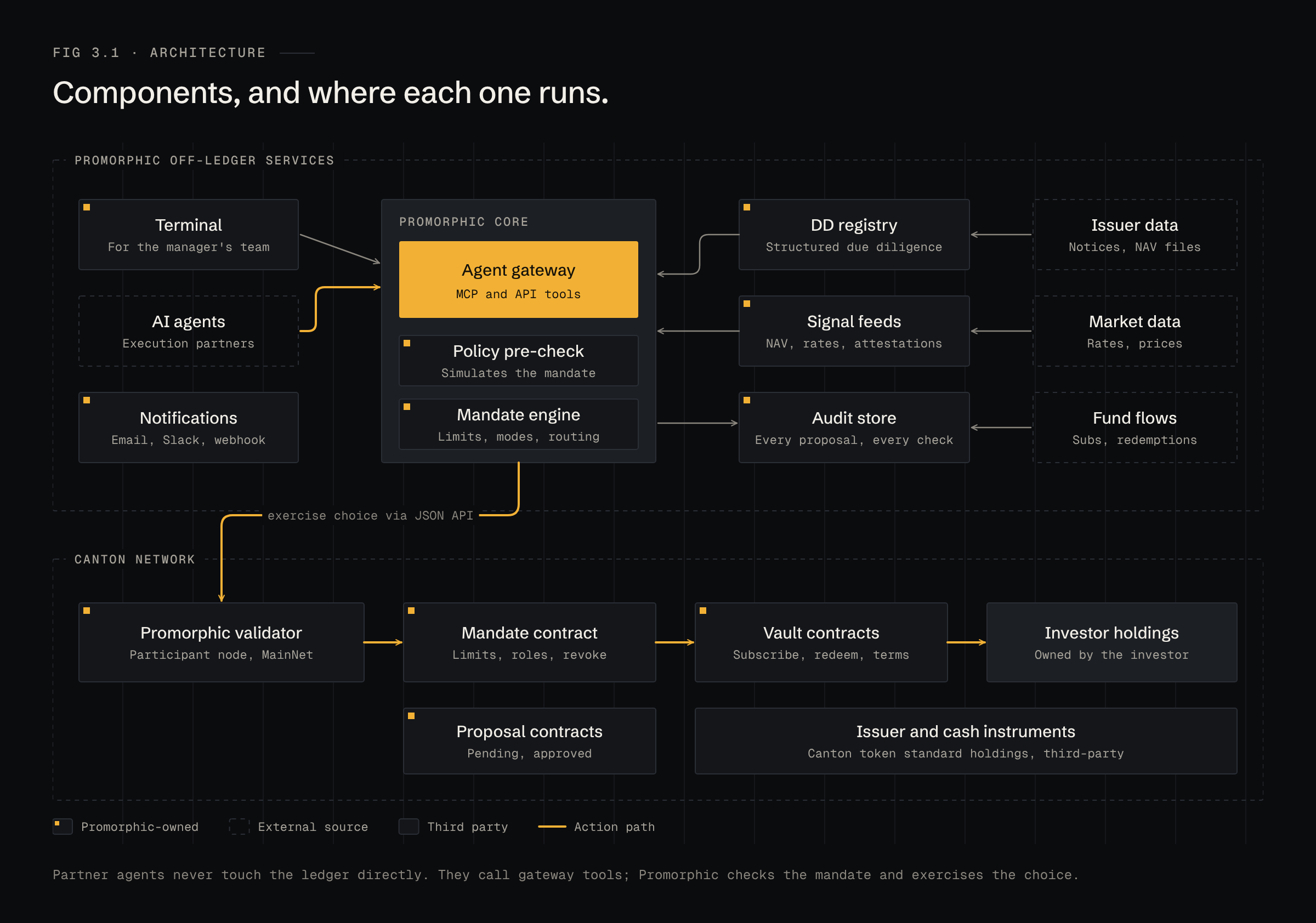
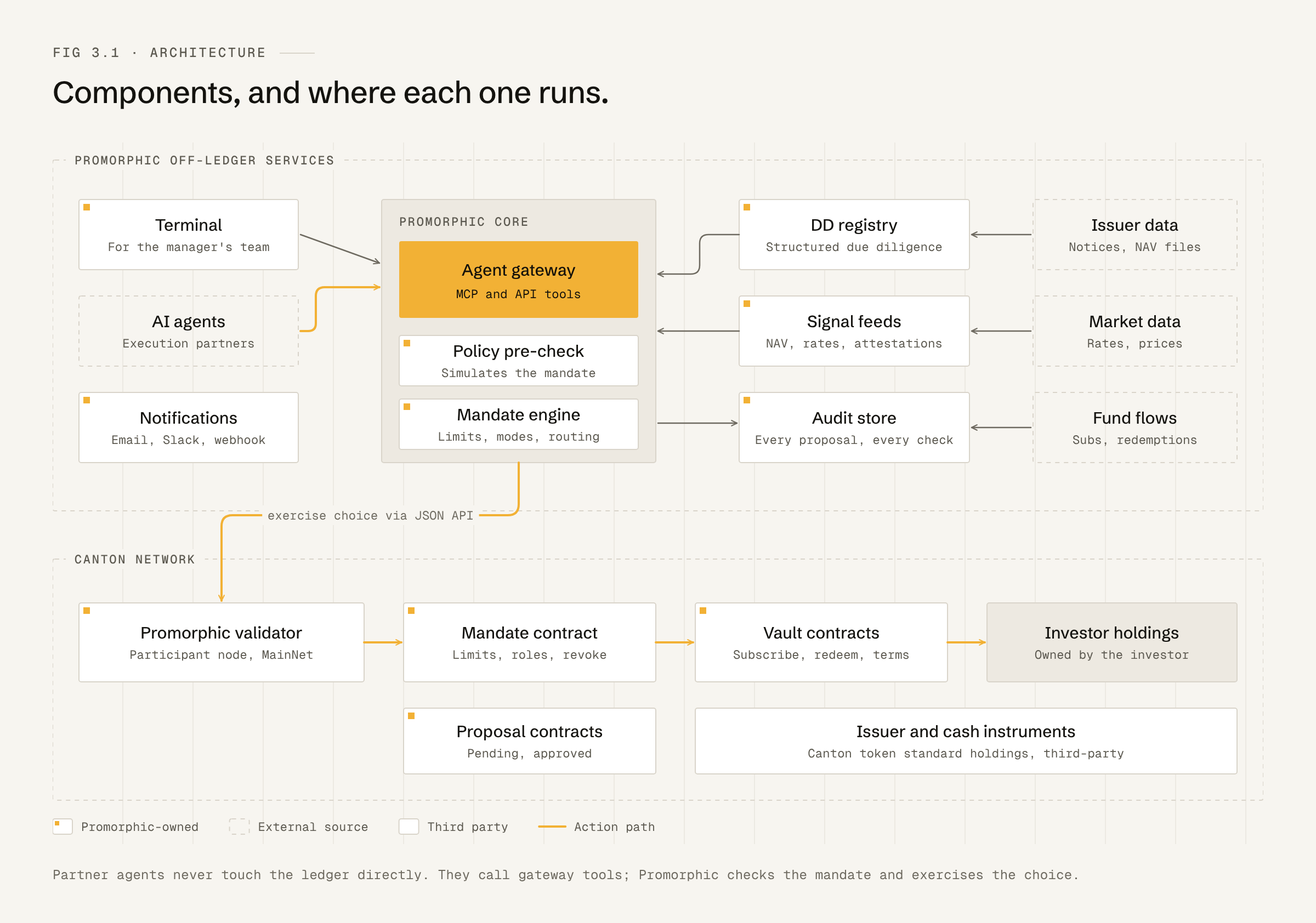
Off-ledger (Promorphic services)
| Component | Job |
|---|---|
| Terminal | Web app for the manager's team: book, vaults, mandate, proposals, record |
| Agent gateway | The only way an agent reaches Promorphic. MCP and REST tools, scoped per mandate |
| Policy pre-check | Simulates the mandate against a proposed action and returns pass or fail with numbers |
| Mandate engine | Holds mandate state off-ledger, routes proposals by mode and threshold |
| DD registry | Structured due diligence for every vault; source documents attached |
| Signal feeds | NAV, rates, attestations, issuer notices, normalised and time-stamped |
| Audit store | Every context, proposal, gate result, signature and ledger reference |
| Notifications | Email, Slack and webhooks to approvers |
On-ledger (Canton)
| Contract | Job |
|---|---|
| Mandate | The manager's rules: universe, limits, triggers, mode, approvers. Grants the agent's party one choice: Rebalance |
| Proposal | A pending action with its reason hash and expiry; approvers exercise Approve |
| Vault | The instrument's terms and the subscribe and redeem workflow with the issuer |
| Holdings | Canton token standard holdings, owned by the manager's party |
Promorphic runs its own Canton validator and participant node, and talks to the ledger through the participant's JSON API.
Parties and rights
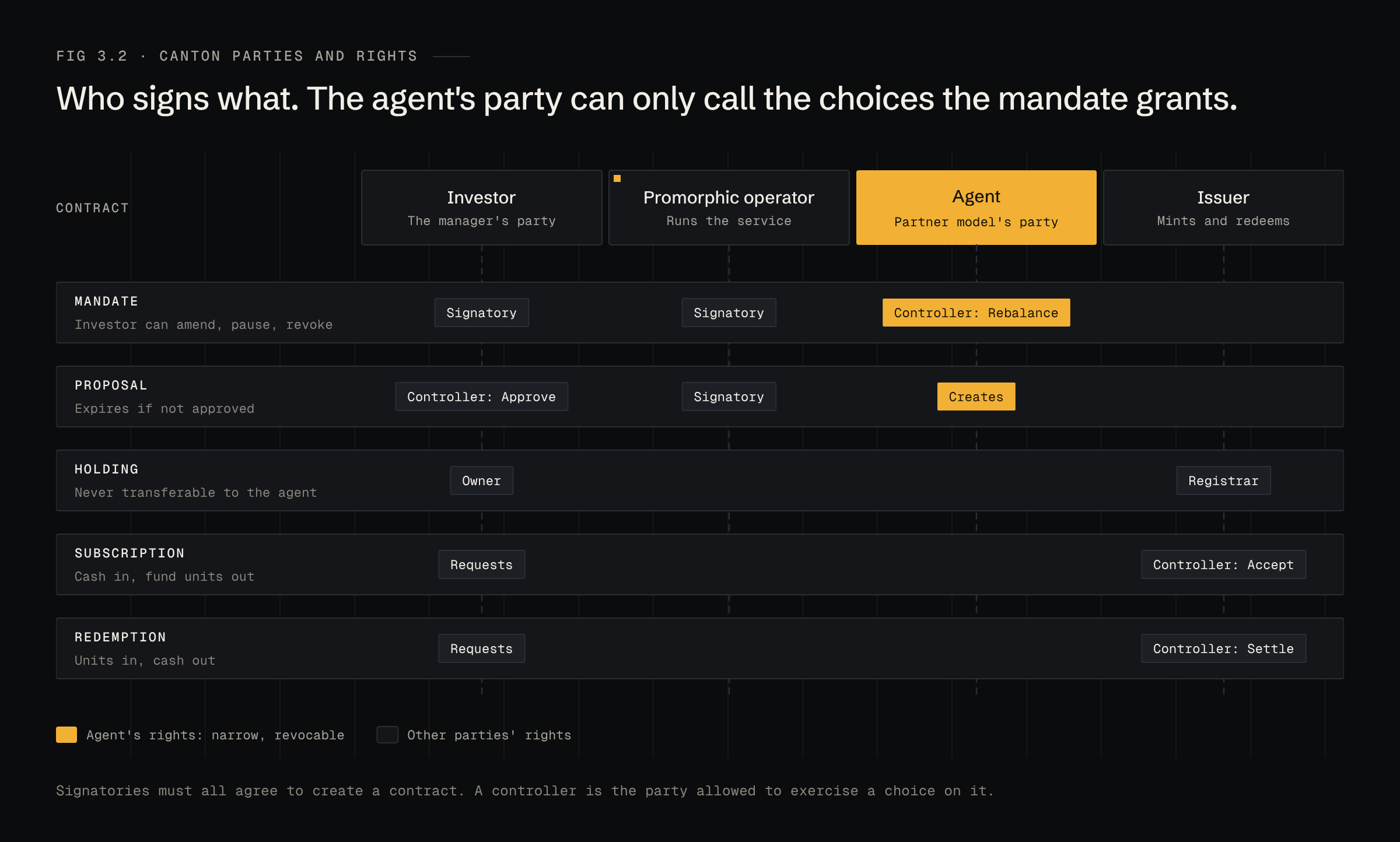
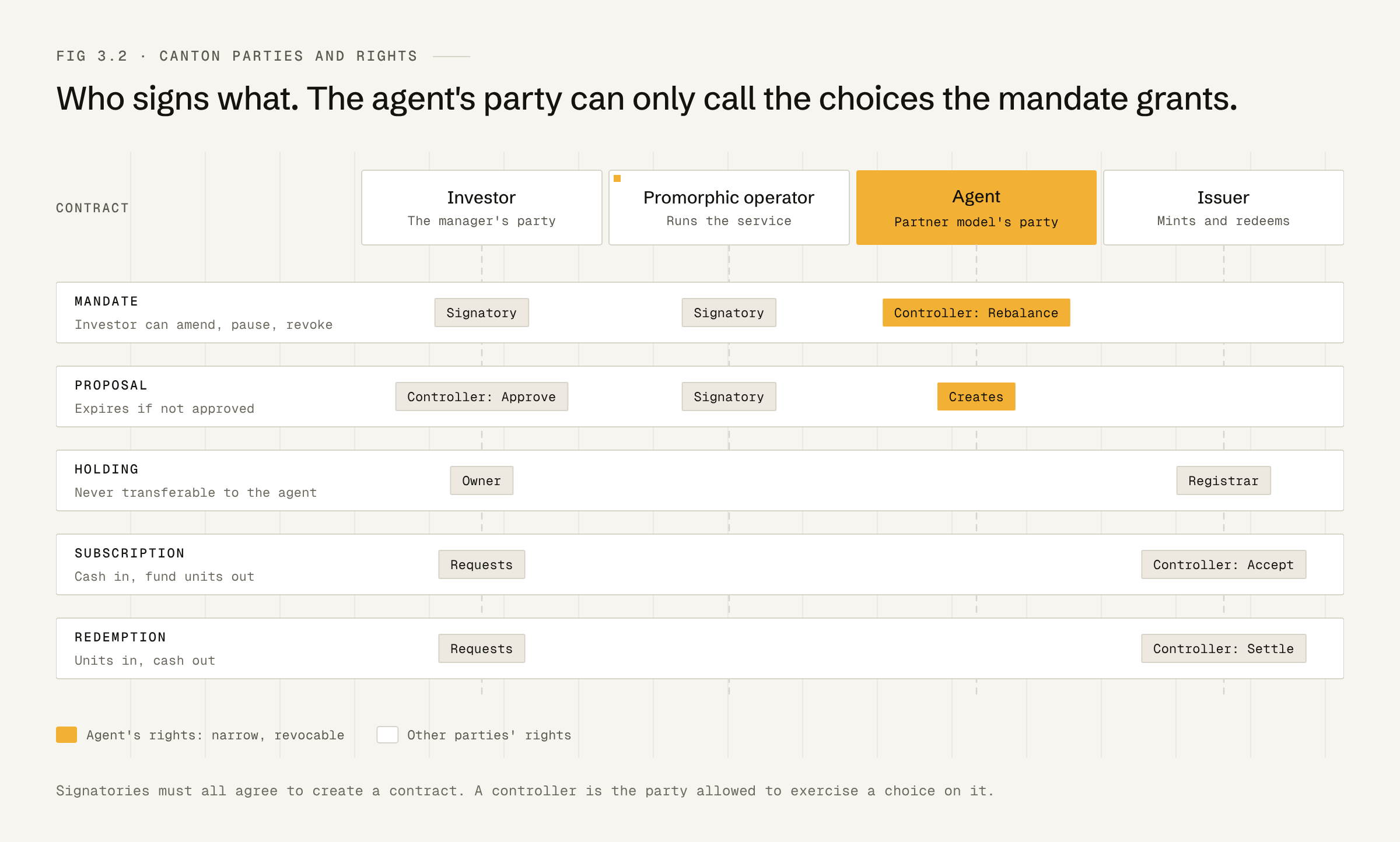
Four kinds of party take part:
- Investor — the manager's own party. Owns every holding. Signs the mandate. Approves proposals.
- Promorphic operator — co-signs the mandate so the service can act on it. Owns nothing.
- Agent — a party per connected agent, hosted by Promorphic. Its only right is the Rebalance choice on one mandate, and only while that mandate is active.
- Issuer — accepts subscriptions and settles redemptions for its own instruments.
The design rule: no contract gives the agent or the operator a choice that moves value to a party other than the investor. A withdrawal is a choice only the investor holds.
Defence in depth
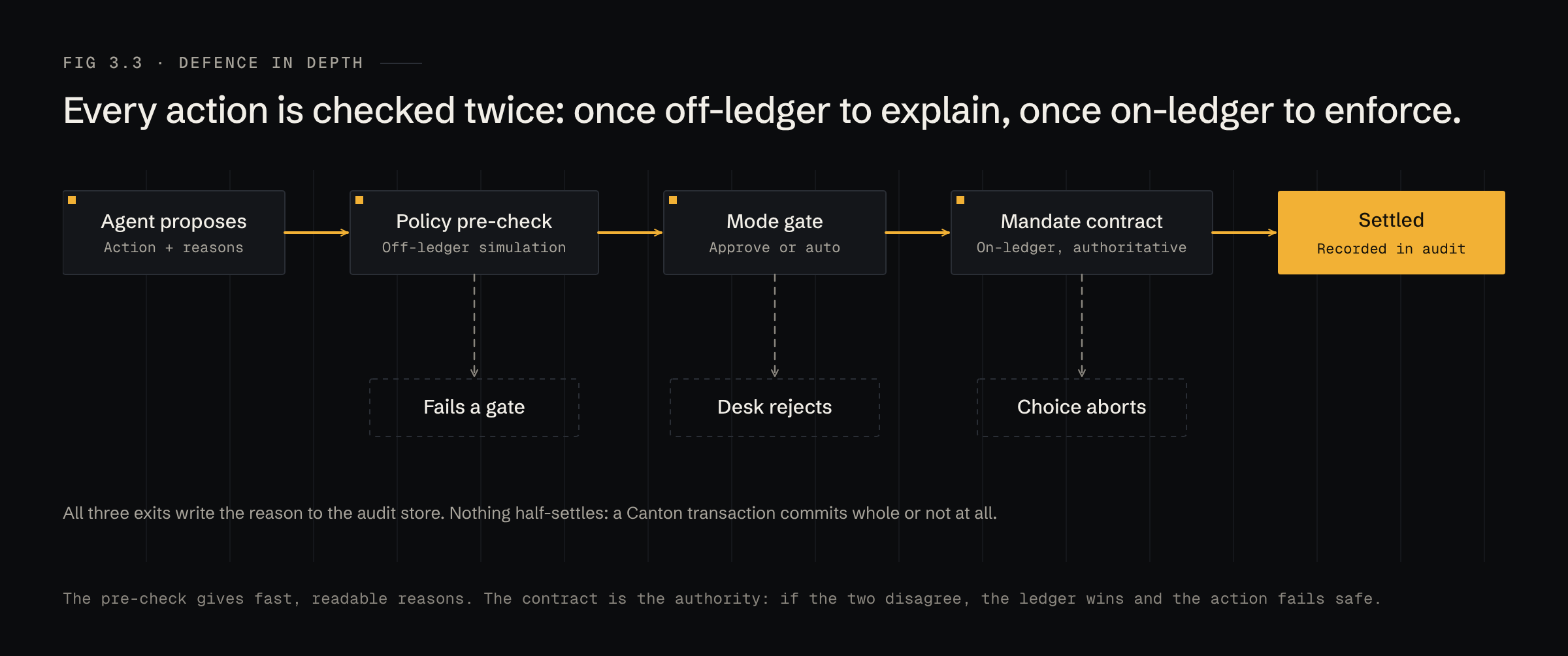
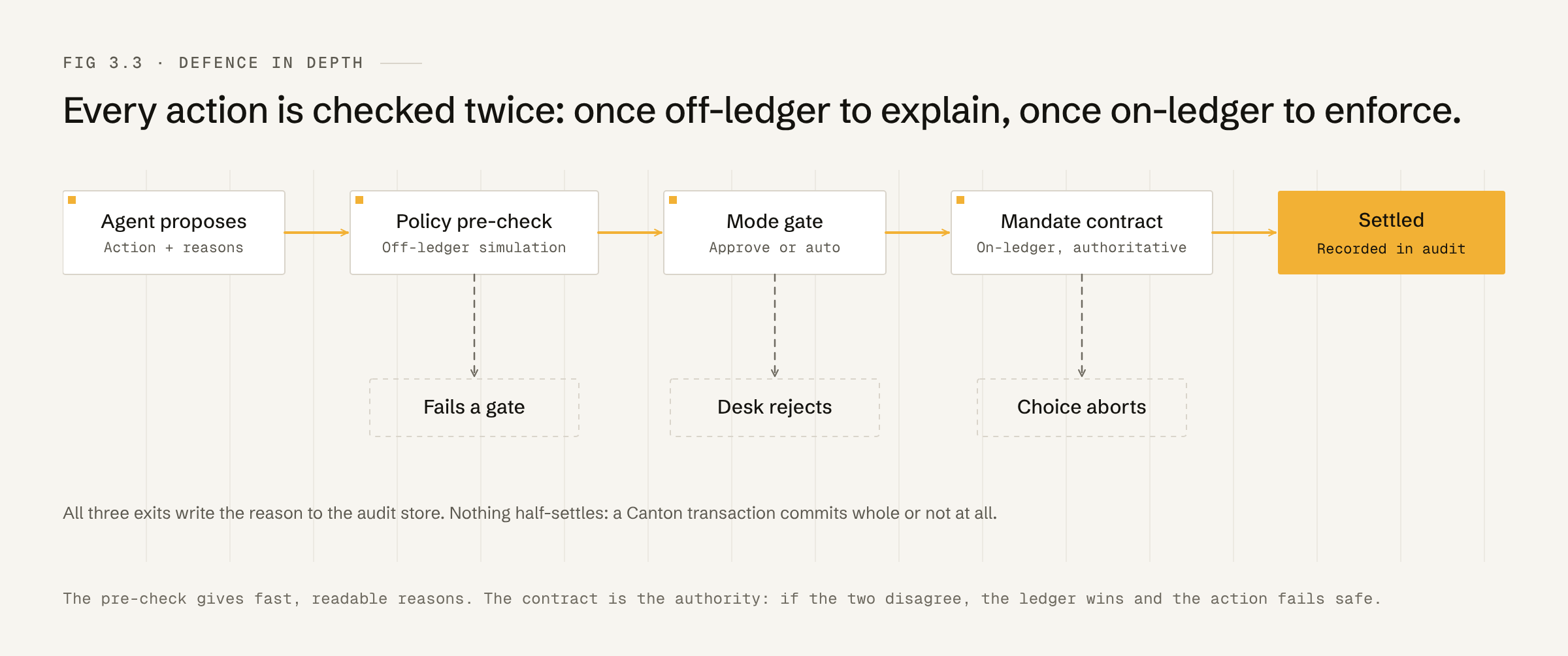
Every action is checked twice:
- Off-ledger pre-check. Fast, and it explains itself: which gate, which number, which limit. This is what the manager reads.
- On-ledger mandate check. The Rebalance choice re-evaluates the limits inside the Daml transaction. If the two checks disagree, the ledger wins and the action fails. A Canton transaction commits whole or not at all, so nothing half-settles.